
Mathias Kiss interroge les cadres dans lesquels nous vivons. Ceux de l’architecture, qui organisent l’espace ; ceux de la société, qui façonnent nos comportements ; ceux de notre regard, qui déterminent ce que nous croyons possible. Son travail explore la manière dont ces structures nous construisent et les possibilités de s’en affranchir.
Formé aux métiers d’art et à la restauration des monuments historiques, il connaît les règles du décor classique, ses techniques et ses proportions. Cette connaissance constitue la matière de sa recherche. L’angle droit, la corniche, le cadre et le miroir deviennent les points de départ d’une transformation : déplacés, fragmentés ou détournés, ils acquièrent une autre présence et ouvrent d’autres lectures de l’espace.
Les séries 90° et Without 90° mettent à l’épreuve la géométrie de notre environnement. L’angle droit est isolé, répété ou supprimé ; les lignes se désarticulent, les surfaces se froissent. Avec Liquid Mirror, la stabilité du reflet se trouble à son tour : le miroir semble se liquéfier et déborder de ses limites. Limitless poursuit cette recherche autour du cadre, de l’horizon et de l’infini. À travers ces œuvres, ce qui semblait fixe devient mobile, ce qui paraissait établi peut être réinventé.
Cette remise en question s’étend aux constructions sociales. Dans Watch You Burn, Mathias Kiss observe les comportements humains et les contradictions de notre époque. Son regard critique, à dimension anthropologique, déplace l’attention vers les valeurs, les conventions et les mécanismes collectifs qui orientent nos existences. Une même question traverse alors les formes et les conduites : quelle liberté conservons-nous à l’intérieur des systèmes que nous avons construits ?
Avec Besoin d’air, cette recherche de liberté prend la forme d’une respiration. Les ciels peints ouvrent une zone de calme, une profondeur dans laquelle le regard peut se perdre et la pensée retrouver de l’espace. La contemplation devient une autre façon de desserrer l’emprise des cadres et de retrouver son propre rythme.
Entre maîtrise et affranchissement, tension et apaisement, le travail de Mathias Kiss transforme ainsi notre expérience du monde. Il rend perceptibles les structures auxquelles nous nous sommes habitués, les met en mouvement et ouvre la possibilité d’habiter autrement.
Alice Heart
Mathias Kiss questions the frameworks within which we live: those of architecture, which organize space; those of society, which shape our behavior; and those of our gaze, which determine what we believe to be possible. His work explores how these structures construct us, and the possibilities of freeing ourselves from them.
Trained in the decorative arts and in the restoration of historic monuments, he knows the rules of classical decor, its techniques and its proportions. This knowledge forms the raw material of his research. The right angle, the cornice, the frame and the mirror become starting points for a transformation: displaced, fragmented or diverted, they take on a different presence and open up other ways of reading space.
The series 90° and Without 90° put the geometry of our environment to the test. The right angle is isolated, repeated or removed; lines come apart, surfaces crumple. With Liquid Mirror, the stability of the reflection is in turn disturbed: the mirror seems to liquefy and spill beyond its limits. Limitless continues this research around the frame, the horizon and the infinite. Through these works, what seemed fixed becomes mobile, and what appeared established can be reinvented.
This questioning extends to social constructs. In Watch You Burn, Mathias Kiss observes human behavior and the contradictions of our time. His critical gaze, anthropological in scope, shifts attention toward the values, conventions and collective mechanisms that steer our lives. A single question then runs through both forms and conduct: what freedom do we retain within the systems we have built?
With Besoin d'air (Need for Air), this search for freedom takes the form of a breath. The painted skies open up a zone of calm, a depth in which the gaze can lose itself and thought can regain space. Contemplation becomes another way of loosening the grip of frameworks and rediscovering one's own rhythm.
Between mastery and liberation, tension and appeasement, Mathias Kiss's work thus transforms our experience of the world. It makes perceptible the structures to which we have grown accustomed, sets them in motion, and opens up the possibility of inhabiting the world differently.
Alice Heart
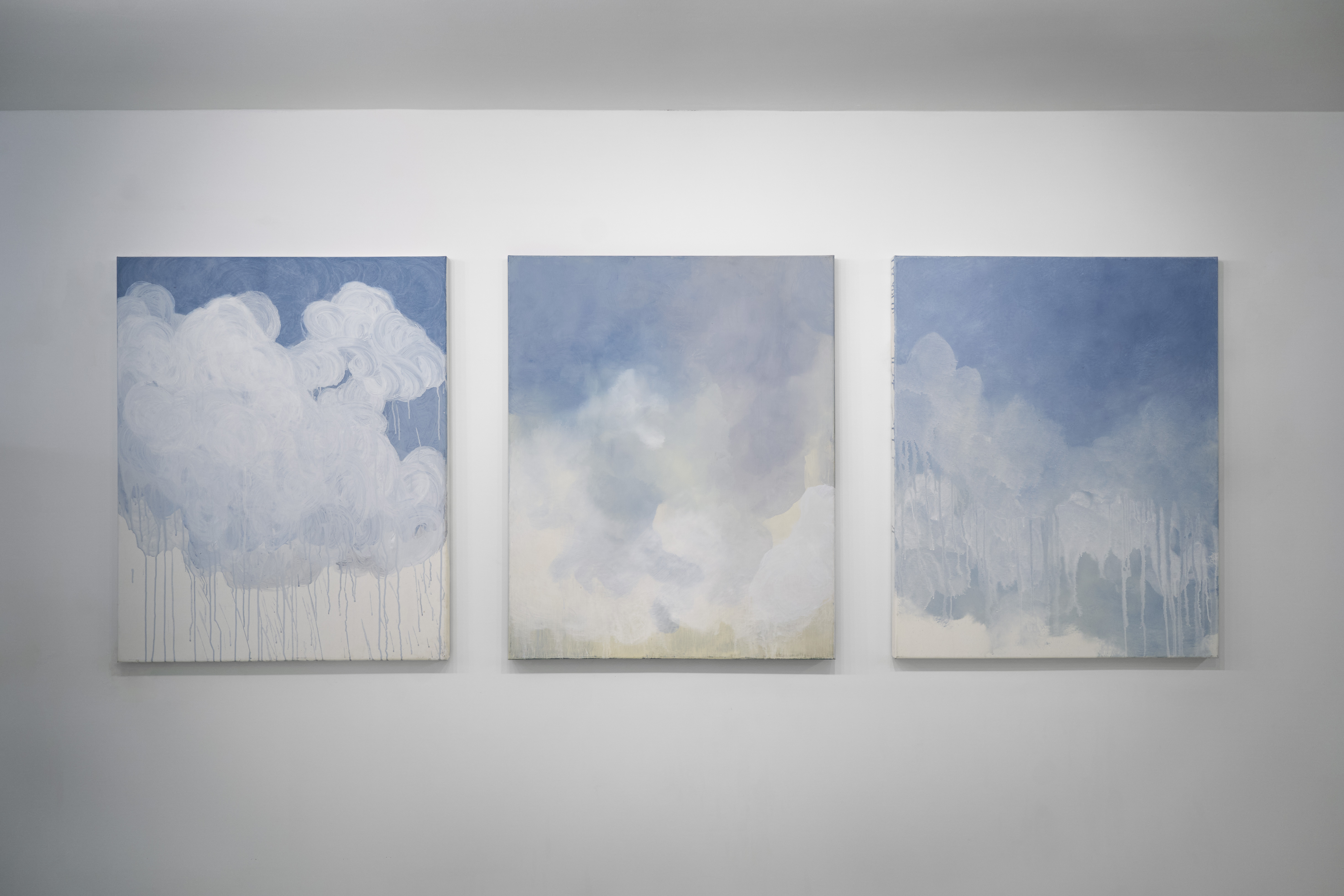
Besoin d'Air / Peinture / Acrylique sur toile, 100 x 80 cm x 3 / Prix sur demande
Besoin d'Air / Painting / Acrylic on canvas, 100 x 80 cm x 3 / Price on enquiry
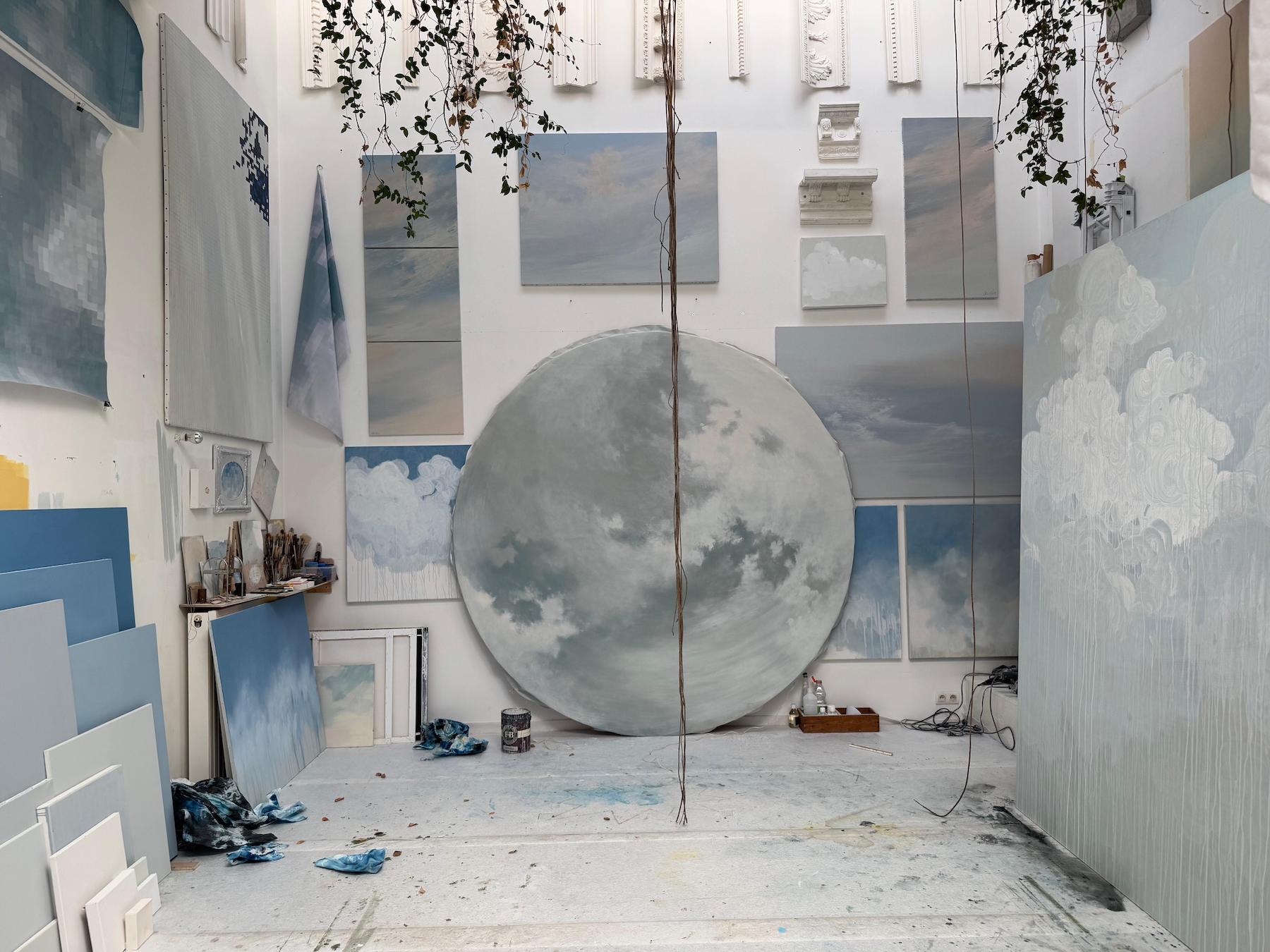
Besoin d'Air / Installation artistique / Peintures, dimensions variables / Visite sur demande
Besoin d'Air / Art installation / Paintings, variable dimensions / Viewings by appointments
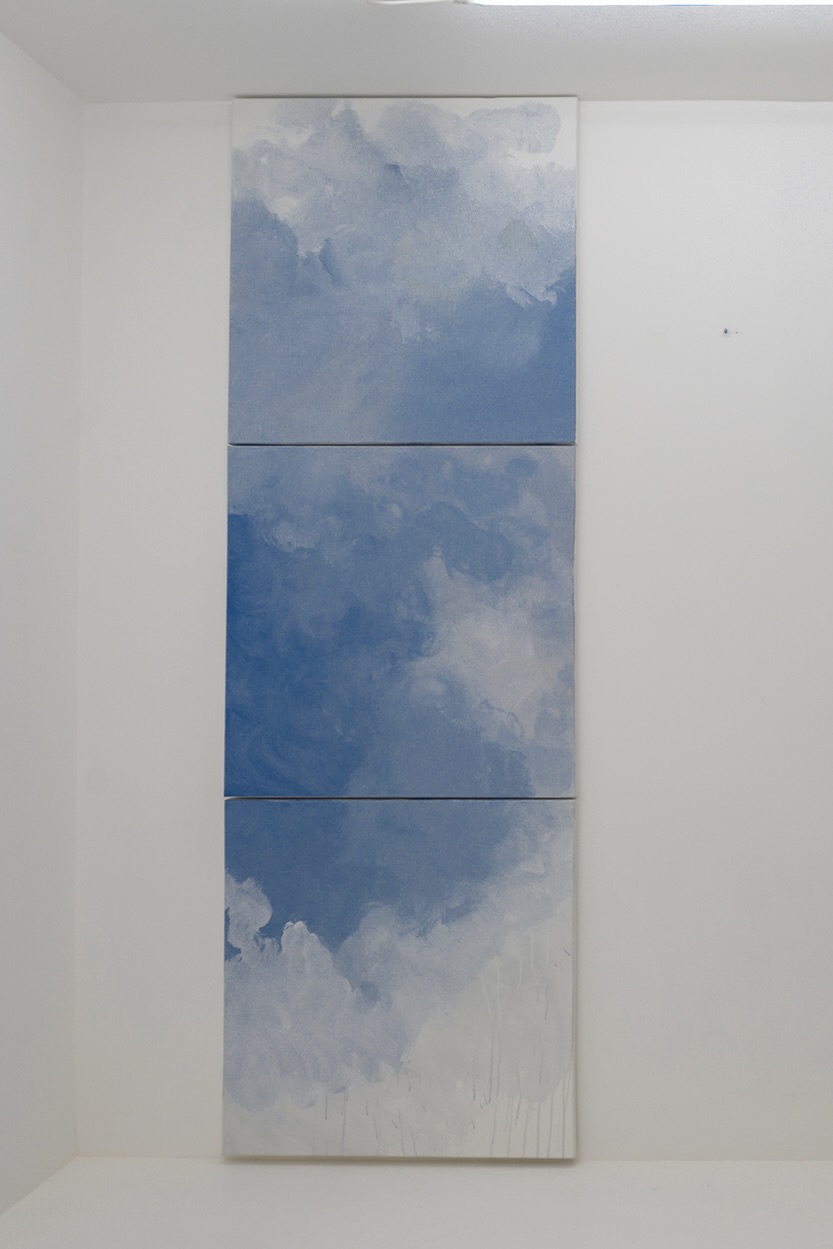
Besoin d'Air / Peinture / Triptyque, acrylique sur toile, 240 x 80 cm / Au cube collection, 2018
Besoin d'Air / Painting / Tryptic, acrylic on canvas, 240 x 80 cm / Au cube collection, 2018
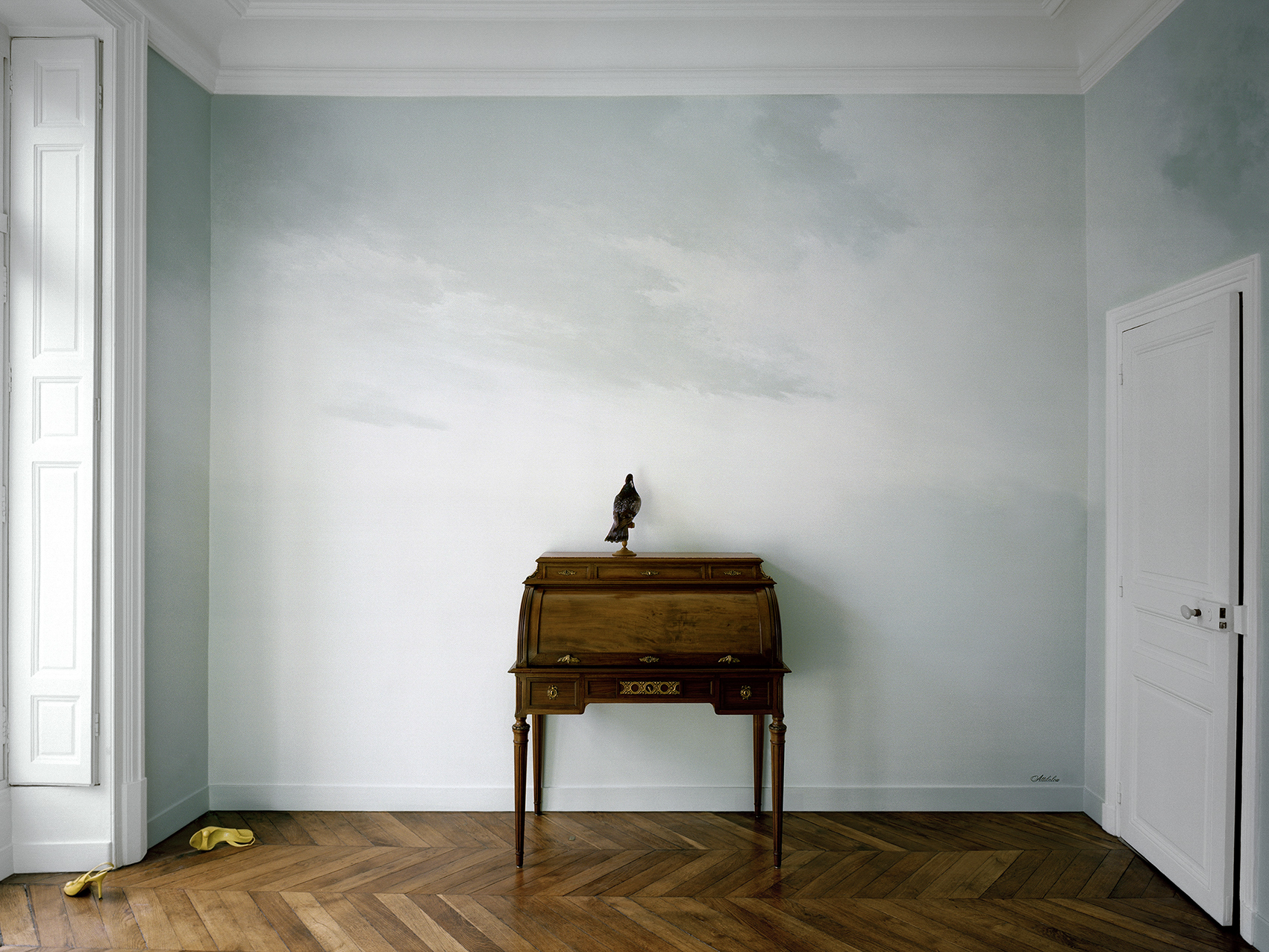
Besoin d'Air / Installation artistique / Peinture panoramique, dimensions variables / Collectionneur privé, 2007
Besoin d'Air / Art Installation / Panoramic Painting, variable dimensions / Private collector, 2007
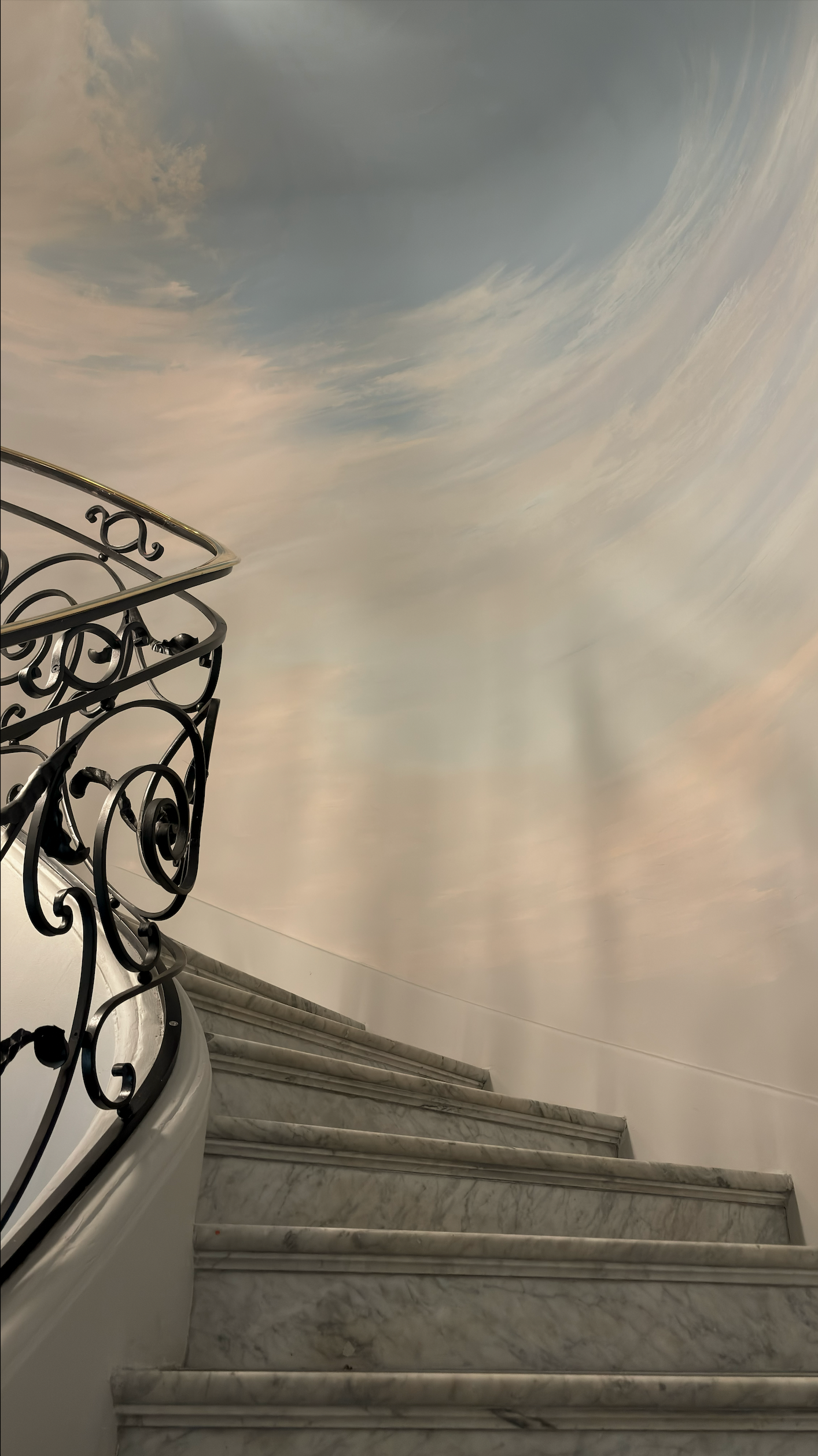
Besoin d'Air / Installation artistique / Peinture panoramique / Collection Grand Hôtel Cayré, 2024
Besoin d'Air / Art installation / Panoramic painting / The Grand Hôtel Cayré, 2024
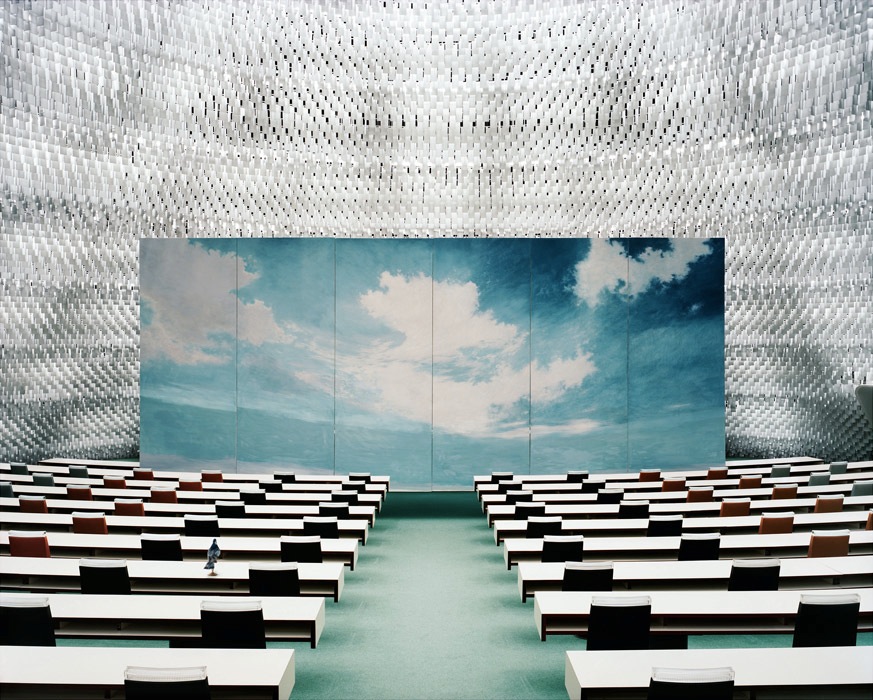
Besoin d'Air / Installation artistique / Peinture sur toile / Siège du PCF pour Wallpaper magazine 2009
Besoin d'Air / Art installation / Painting on canvas / PCF headquarters for Wallpaper magazine 2009
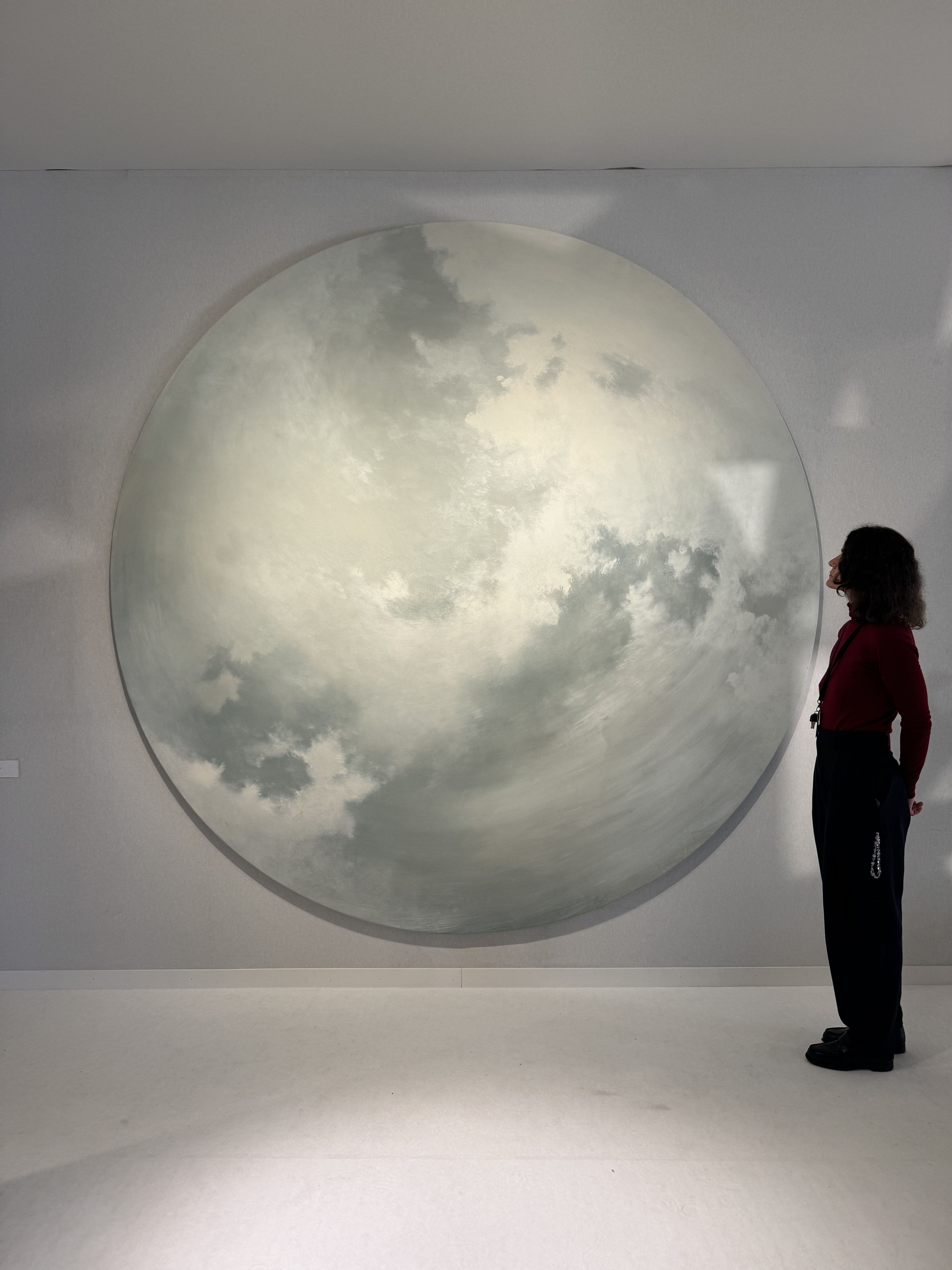
Moon série Besoin d'Air / Peinture / Acrylique sur toile, diamètre 2.60 m / Prix sur demande
Moon, Besoin d'Air serie / Painting / Acrylic on canva, diameter 2.60 m / Price on enquiry
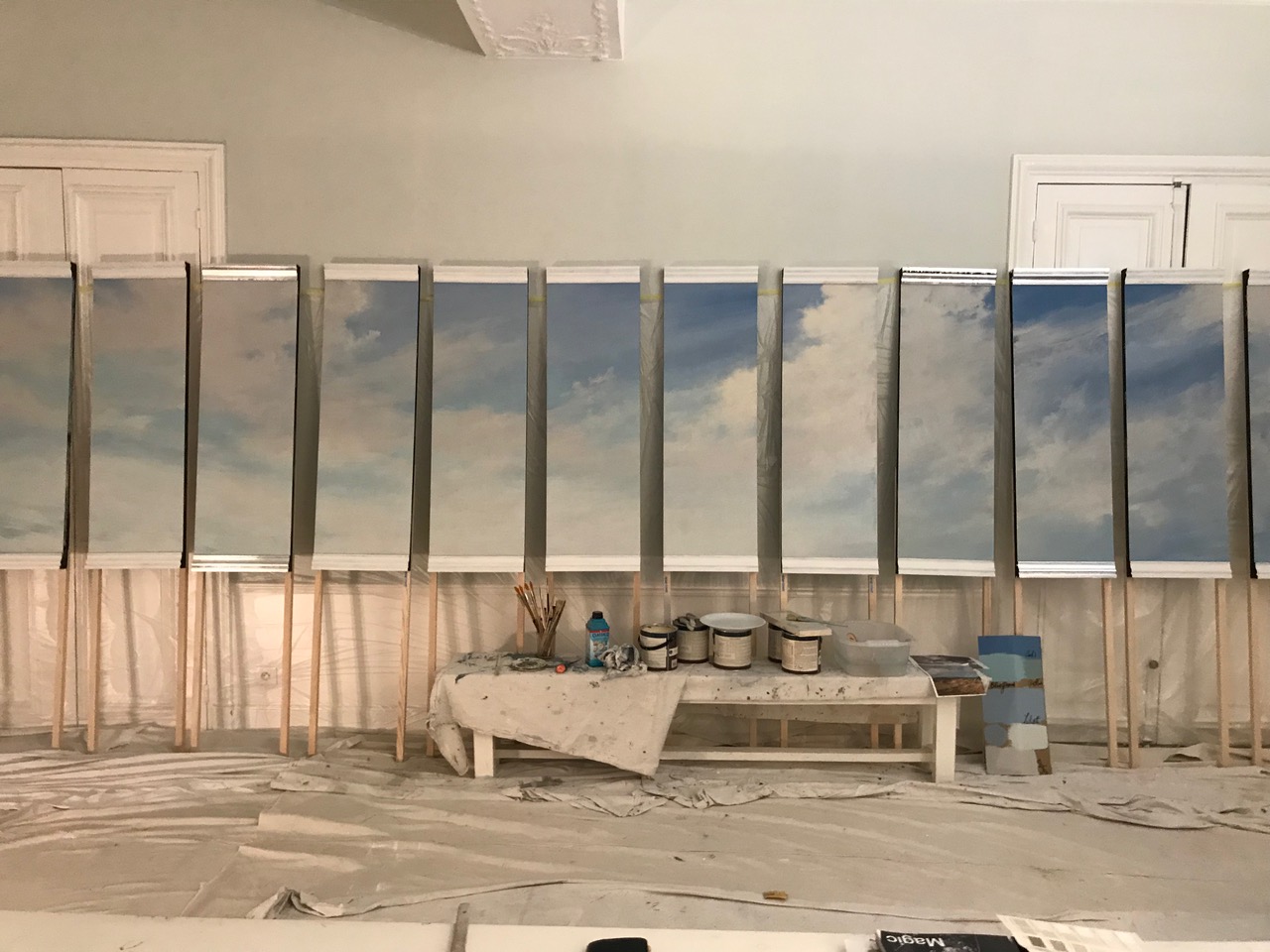
Besoin d'Air / Peinture / Acrylique sur bois, 13 x 150 x 50 cm / Curation Art Bridge, Collection Cheval Blanc Courchevel 2018
Besoin d'Air / Painting / Acrylic on wood, 13 x 150 x 50 cm / Curator Art Bridge, Cheval Blanc Courchevel 2018